Parkside Quarries | Jib Crane and Tube Vacuum Lifter
The Requirement:
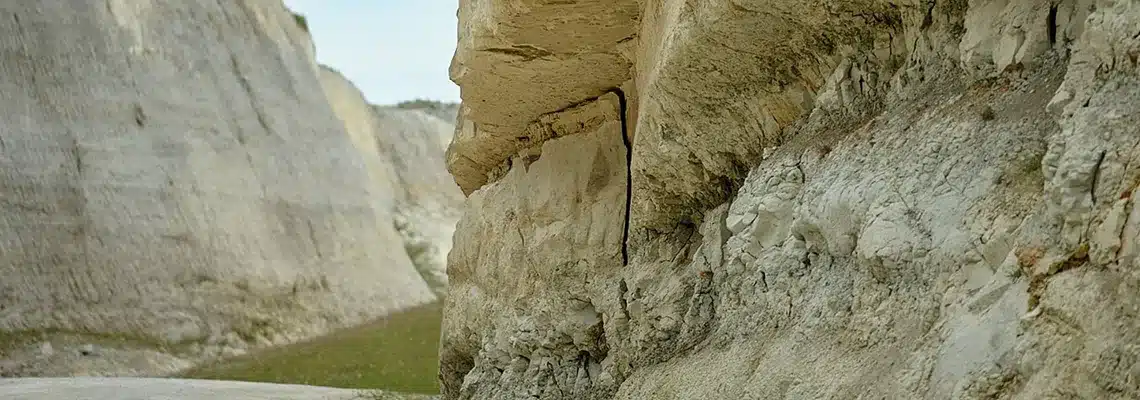
Parkside Quarry has been extracting and processing Oamaru Stone since 1906 and is now one of New Zealand’s most advanced limestone operations. Large 2-ton blocks are cut from the quarry floor and transported just 400 metres to the factory, where they are further processed through breakdown saws, CNC machines, and hand-finishing.
With constant workflow feeding multiple production stages—including one of the largest 5-Axis CNC machines in Australasia—Parkside needed a safer, faster way to transfer rough-sawn stone pieces into finishing machines without interrupting their high-efficiency processes.
To support this operation, Parkside required a lifting solution that would eliminate the two-person manual handling of rough-sawn Oamaru Stone across three factory areas and allow operators to move stone pieces into the machines with less physical strain and greater speed.
The Challenge:
The lifting system needed to integrate seamlessly into a busy production environment—fast to use, capable of rotating stone pieces 90 degrees, and operable by a single person without slowing down output.

The porous nature of Oamaru Stone created an additional technical challenge, as standard vacuum lifters struggle to achieve and maintain suction on such material. This meant any solution had to be highly specialised to work reliably within Parkside’s continuous, multi-stage fabrication workflow.
The Solution:
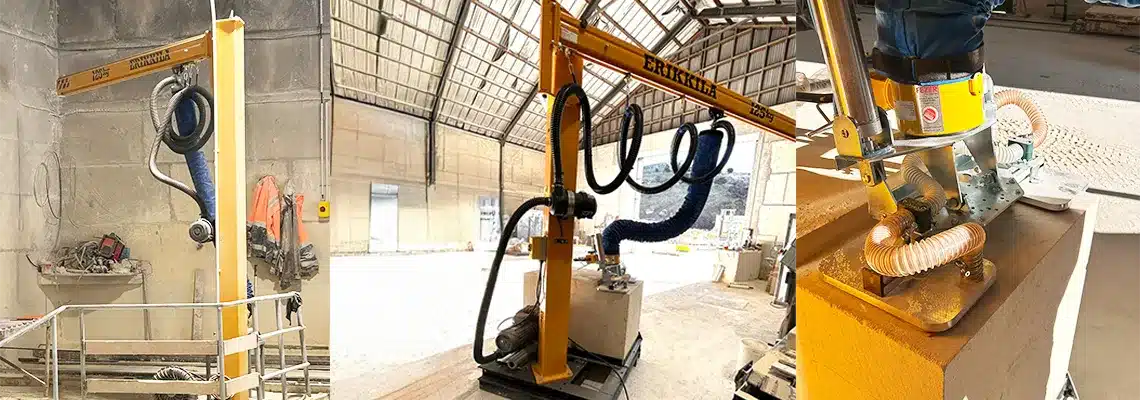
Stratalign supplied a mix of fixed and portable jib cranes paired with vacuum tube lifters engineered specifically to lift porous stone. These systems allowed operators to quickly pick, lift, and rotate the stone while maintaining production speed and reducing manual handling to a single-person task.
A battery-powered vacuum lifter was trialled in one area in an effort to avoid running power cables across the factory floor. However, due to the stone’s porosity, the unit could not generate sufficient vacuum pressure to lift the material safely.
Stratalign replaced it with a powered vacuum tube lifter, which delivered the required suction performance and proved successful in the application. The result was a safe, efficient lifting process that complemented Parkside’s modern manufacturing line while protecting workers and supporting continuous production.