

Single phase or three phase, it's the question most workshop owners hit early when shopping for an electric hoist. And the answer affects more than you might think. It shapes how the hoist performs under load, how long the motor lasts, and whether your site's electrical supply can support the setup you need.
This guide covers the key differences between single-phase and three-phase electric hoists, the performance trade-offs, and how to match your power supply to the right hoist for your workshop.
What's the Difference Between Single-Phase and Three-Phase Power?
Single-phase power runs on a single alternating current wave at 240V, the standard supply in most NZ homes and small workshops. Three-phase power delivers three overlapping current waves simultaneously at 400V, the standard in manufacturing plants, engineering workshops, and most commercial industrial premises.
For electric hoists, that difference matters. Three-phase motors run cooler, vibrate less, and handle sustained load cycles more effectively. There are no gaps in power delivery, so the motor works more consistently under load, reducing heat buildup and mechanical wear over time.
Single-phase hoists draw significantly higher amperage on startup, which heats the motor faster and limits how many starts per hour are possible before the thermal overload switch cuts in. Longer chain drops compound this; each lift cycle runs longer, generating more heat. For applications with extended drops or frequent starts, a single-speed three-phase hoist is the recommended solution. It runs the coolest of all configurations.
| Single Phase | Three Phase | |
| Voltage | 240V | 400V |
| Power Delivery | Single current wave | Three overlapping waves |
| Motor Temperature | Higher under sustained use | Cooler, more consistent |
| Vibration | More pronounced | Minimal |
| Duty Cycle Suitability | Light/intermittent use | Regular/industrial use |
| Speed Control | Typically, single speed only | Single and dual speed options |
| Capacity Range | Up to ~2,000kg | 10,000kg+ |
| Hoist Protection Rating | Varies | IP54-IP55 |
| Infrastructure | Most workshops | Requires industrial supply or upgrade |
What Can a Single-Phase Electric Hoist do?
Single-phase electric hoists run off a standard 240V supply, no electrician required beyond a basic installation, no lines company application, no infrastructure upgrade. For workshops that lift occasionally and lightly, that simplicity is the appeal.
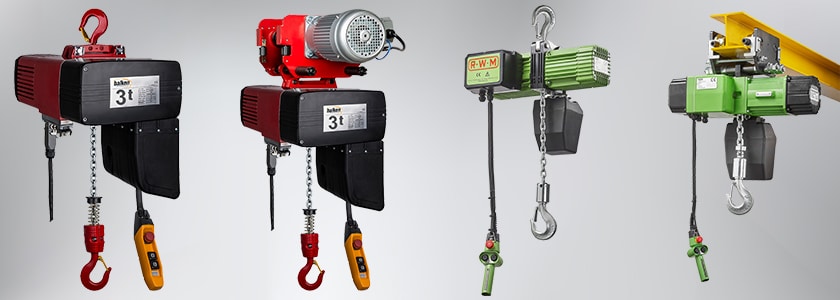
In practice, single-phase hoists suit smaller operations where lifting isn't a daily requirement. Loads up to around 500kg are manageable, and for intermittent use, a single-phase hoist can get the job done without overcomplication.
The limitations become apparent once lifting frequency increases:
- Motor heat: Single-phase motors run hotter under sustained use, shortening duty cycles and accelerating wear over time.
- Vibration: More pronounced than three-phase, which affects load control, particularly where precise positioning matters.
- Speed control: Most single-phase hoists are single speed only, making accurate load placement harder in a production environment.
- Duty cycle: Not rated for frequent industrial lifting, pushing beyond intermittent use risks premature motor failure.
For workshops where lifting is a regular part of operations, daily use, heavier loads, or work that demands careful load control, single-phase starts to fall short of what the job requires.
Why Three-Phase Electric Hoists are the Industrial Standard
Three-phase power delivers current in a continuous, overlapping cycle. There are no gaps in power delivery, which means the motor runs more consistently under load. Less heat builds up. Less vibration. Less mechanical wear over time.
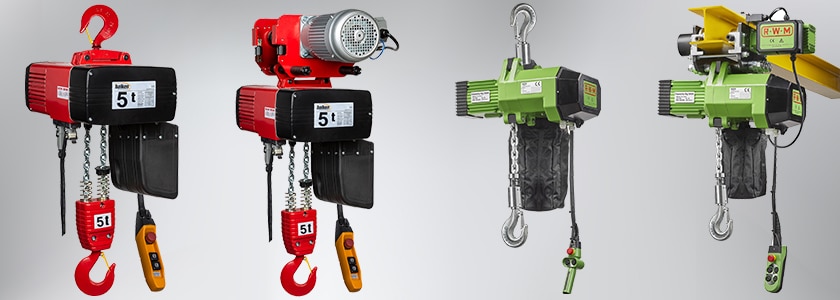
That translates directly into performance. Three-phase hoists support higher duty ratings, more reliable speed control, and longer motor life than their single-phase equivalents. In practical terms, this means:
- Duty rating: Stratalign's full electric hoist range carries an M5/2m (ISO/FEM) classification, rated for regular industrial lifting, not intermittent use.
- Speed control: Both single and dual speed configurations are practical and reliable on a three-phase supply.
- Capacity range: 125kg through to 5,000kg, all running on the same 400V three-phase infrastructure.
- Protection: IP54–IP55 hoist protection and electromagnetic spring brakes are standard across the range.
Three-phase also removes the capacity ceiling that limits single-phase in practice. As operational requirements grow, the same power infrastructure supports the full range of lifting needs without having to revisit the supply question.
It's worth noting that three-phase isn't exclusively for heavy industry. Even a compact 125kg or 250kg workshop hoist benefits from the smoother operation, better load control, and stronger protection that three-phase enables.
Is it Worth Getting Three-Phase Power Connected to Your Workshop?
For many NZ workshop owners, this is the real question. The hoist decision is straightforward once the power supply question is resolved.
Getting three-phase connected requires a registered electrician and an application to your local lines company. Cost varies by site, so get a quote early. The upgrade makes most sense when lifting is frequent, loads are heavy, or other three-phase equipment is already part of the plan. For workshops fitted out from scratch, getting the infrastructure right from the start is significantly cheaper than retrofitting later.
Which Three-Phase Electric Hoist Suits Your Workshop?
Stratalign's electric hoist range covers two brands across three distinct configurations. Here's how they compare:
| Balken G2 | RWM | |
| Capacity range | 250kg – 5,000kg | 125kg – 500kg+ |
| Speed options | Single and dual speed | Single and dual speed |
| Duty rating | M5/2m (ISO/FEM) | M5/2m (ISO/FEM) |
| Hoist protection | IP55 | IP54 |
| Overload protection | Adjustable slip clutch | Load limiter clutch |
| Trolley option | Electric or manual | Electric or manual |
| Positioning | Best value for money | Premium, high-demand use |
The Balken G2 is Stratalign's everyday commercial chain hoist, with strong specifications, practical features, and the best value on the NZ market for workshops that need reliable three-phase lifting without over-specifying the solution.
The RWM is built for operations where demand is high, and downtime isn't an option. Designed for long service life and ease of servicing, it suits fabrication bays, production environments, and any application where the hoist is working hard every day.
Both ranges run on a 400V three-phase supply and come with a 24V pendant controller and emergency stop as standard.
Not Sure Which Hoist Suits Your Site?
Single phase or three phase, the right electric hoist comes down to what your site can support and what your lifting work actually demands. For most NZ workshops running regular lifting operations, three-phase is the practical and reliable choice, and the infrastructure investment pays across more than just the hoist.
If you're unsure which setup suits your operation, the Stratalign team can help. Get in touch today for an obligation-free consultation.
