
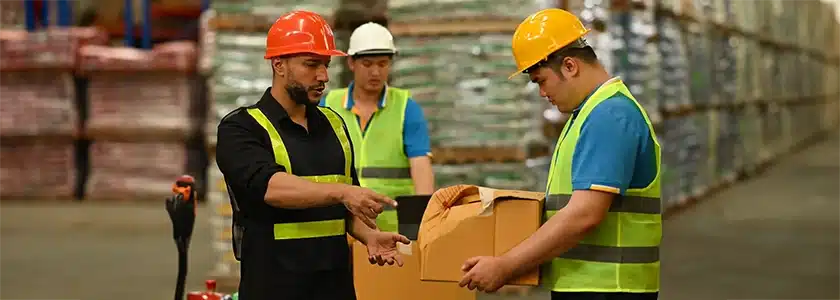
Product damage is one of the leading causes of inventory shrinkage in warehouses. Many of those losses happen during forklift movements. Poor handling, incorrect attachments, or small errors in speed and positioning turn routine lifts into avoidable damage.
Safe forklift operation reduces these losses. It protects your stock, limits equipment wear, and improves workflow efficiency. With the right handling techniques and purpose-built forklift attachments, you prevent product damage before it affects your inventory numbers.
This blog explains the common causes of damage, how to handle different loads safely, the role of speed and manoeuvring, the best attachments for reducing inventory shrinkage, and the training every operator needs to keep your warehouse safe, compliant, and efficient.
What Causes Product Damage in Forklift Operations?
Product damage in forklift operations is mainly caused by poor handling practices, and these errors account for an estimated 5 to 10% of total inventory shrinkage. A large portion of warehouse losses comes from routine movements where loads are lifted, transported, or positioned without the right technique or equipment.
Common causes include:
- Incorrect fork spacing or poor load balance.
- Excessive speed, sharp turning, or sudden braking.
- Poor visibility in tight aisles.
- Driving over uneven floors or cluttered spaces.
- Using the wrong attachment for the load.
- Worn or damaged forks.
- Attachments not suited to fragile or heavy materials.
- Rushed movements to meet deadlines.
- Repeated unnecessary handling.
- Limited space for safe manoeuvring.
These issues lead to crushed pallets, unstable loads, dropped goods, and avoidable collisions. Every incident adds cost through damaged stock, equipment repairs, and lost time. When these problems occur repeatedly, they directly increase inventory shrinkage and reduce overall warehouse efficiency. Addressing safe forklift operation early protects your products and your bottom line.
How Do You Handle Fragile and Heavy Loads Safely?
Fragile and heavy loads are damaged most often when they are not positioned, secured, or supported correctly. Safe forklift operation starts with preparing the load and using handling techniques that match the weight, shape, and stability of the product.
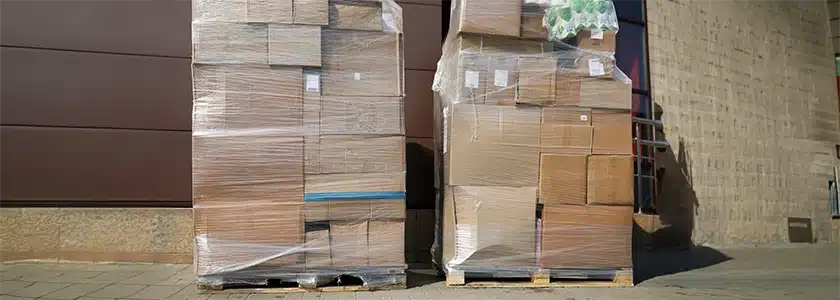
Safe handling practices include:
- Centre heavy loads on the forks to maintain balance.
- Keep loads low while moving to reduce tipping risks.
- Apply a slight mast tilt to stabilise pallets.
- Avoid stacking fragile goods beyond the safe load height.
- Wrap, strap, or contain unstable items before lifting.
- Check pallet integrity before moving heavy goods.
These steps reduce shifting, compression damage, and impact-related breakage. They also help operators maintain better control in tight warehouse spaces. Focusing on proper preparation and controlled handling is one of the simplest ways to reduce product damage and lower long-term inventory shrinkage.
How Do Speed and Manoeuvring Affect Load Protection?
Safe forklift operation depends heavily on speed control and smooth manoeuvring. Sudden movements shift weight, destabilise loads, and increase the chance of drops or collisions. These incidents are a major contributor to product damage and ongoing inventory shrinkage.
Key guidelines for safer movement include:
- Keep indoor travel speeds under 10 km/h.
- Slow down before corners, intersections, or blind spots.
- Avoid sharp turns that place sideways pressure on the load.
- Brake gently to prevent forward load shift.
- Maintain clear visibility of the path ahead.
- Use the horn and lights in high-traffic areas.
Uneven floors, pallets left in aisles, and tight spaces increase the risk further. When operators adjust speed and steering to match these conditions, they maintain better control of both the forklift and the load.
Consistent adherence to these forklift safety guidelines reduces impact damage, protects stock during transport, and supports long-term forklift accident prevention across your warehouse.
What Are the Best Forklift Attachments for Preventing Product Damage?
The right attachments play a direct role in safe forklift operation. They stabilise loads, reduce manual handling, and support operators when dealing with materials that are fragile, oversized, or difficult to control. Using purpose-built attachments lowers the risk of dropped loads and helps reduce inventory shrinkage across the warehouse.

Forklift Jibs
Forklift jibs support suspended or irregular loads that cannot sit securely on standard forks. They reduce the chance of swinging or impact during movement and help operators place loads with greater accuracy.
Forklift Extensions
Forklift extensions improve reach and stability when moving long or oversized pallets. They spread weight more evenly and remove pressure points that lead to product bending or collapse during transport.
Drum Handling Attachments
Drums are heavy, round, and prone to rolling or tipping. Drum handling attachments grip and support them securely, reducing spills, dents, and cross-contamination risks in food, chemical, and manufacturing environments.
Hydraulic Attachments
Hydraulic clamps, rotators, and side-shifters give operators controlled and precise load movement. They reduce product damage by preventing over-handling, crushing, or sudden shifts. Check out our guide to Hydraulic Forklift Attachments for more information.
What Training Do Operators Need for Safe Forklift Handling?
Operator training is one of the most effective ways to prevent product damage and reduce inventory shrinkage. Even the best equipment cannot compensate for poor technique or inconsistent safety habits.
Effective training should include:
- Load assessment, including weight, balance, and centre of gravity.
- Correct fork positioning and spacing for different load types.
- Understanding forklift capacity limits and stability principles.
- Safe travel practices, such as speed control and cornering.
- Pre-operation checks to identify worn forks or damaged pallets.
- Correct use of attachments during lifting, carrying, and placement.
When operators are trained to follow forklift safety guidelines and use equipment appropriately, product damage decreases, workflow improves, and inventory shrinkage becomes easier to control.
A Safer Approach to Reducing Product Damage
Safe forklift operation protects your products, your equipment, and your bottom line. Stratalign supports this approach by supplying certified forklift attachments and practical handling solutions that improve control, reduce product damage, and strengthen overall safety.
Ready to improve forklift safety and reduce inventory shrinkage?
