
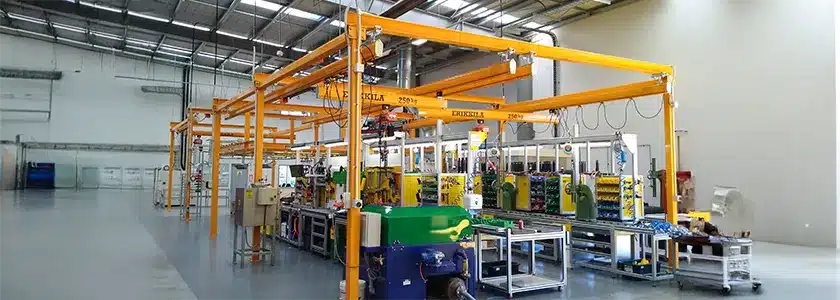
Lifting challenges come in all shapes and sizes, and so do crane systems. Whether you're running a factory, workshop, or manufacturing line, choosing the right setup can make a big difference to safety, efficiency, and productivity. In this guide, we break down the key types of cranes and how to choose the right one.
Understanding the Different Types of Crane Systems
There’s no one-size-fits-all solution when it comes to lifting equipment. Your workspace, lifting requirements, and operational flow will all influence the best fit. Here’s a rundown of the most common crane systems.
Jib Cranes
If you’re after a solution for repetitive, localised lifting tasks, jib cranes are a smart choice. Mounted to floors, walls, or columns, jib cranes offer a swinging arm (the “jib”) that handles materials within a fixed radius. They're ideal for workstations and offer quick, controlled lifts right where you need them.
Monorail Cranes
For linear movement along a fixed path, monorail systems are often used in assembly lines or transfer operations. They're a compact alternative to larger systems and great when ceiling space is limited or you need a straightforward point-to-point lift.
Light Crane Systems
Need flexibility and efficiency in the same system? Modular, light crane systems make it easy to cover multiple areas without major structural changes. Our guide to selecting the right light crane explains how different profiles and configurations can adapt to your operation.
Portable Cranes
If mobility is key, portable cranes offer a practical solution. These are especially useful in temporary setups, small workshops, or operations where fixed systems aren’t viable. They’re compact, cost-effective, and easy to reposition.
Overhead and Gantry Cranes
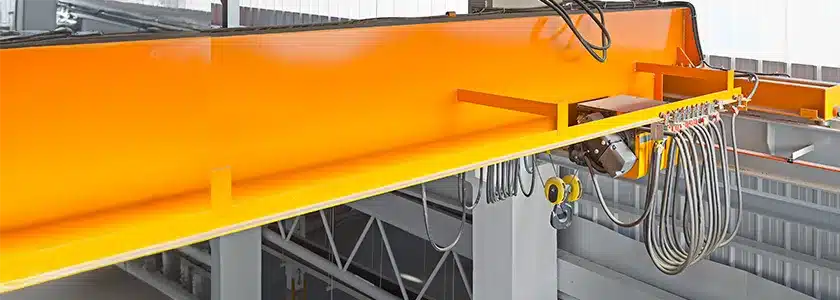
When you need serious lifting power and wide-span coverage, overhead or gantry cranes deliver. Depending on your layout and load demands, you may choose between manual systems or powered variants. Not sure which to go with? This breakdown of manual push vs. powered overhead cranes outlines the pros and cons of each.
Key Factors to Consider When Choosing a Crane System
Not all crane systems are created equal, and neither are the environments they operate in. To make the right investment, you need to think beyond specs and consider how the crane will perform in your specific setting. From daily workloads to long-term growth, a well-matched system should align with both your operational needs and business goals.
Here are the key elements to evaluate:
- Load Requirements: What’s the maximum weight you’ll need to lift, and how often? Frequent light lifts call for different gear than occasional heavy-duty loads. You’ll need to account not just for static weight, but dynamic forces if you’re moving materials quickly or stopping suddenly.
- Lifting Range: Consider both vertical height and horizontal movement. Does the crane need to reach across multiple bays, lift to mezzanine levels, or navigate obstacles? Underestimating this can lead to operational bottlenecks and safety risks.
- Space Constraints: Your floor plan, ceiling height, and structural limitations all play a role. For example, jib and wall-mounted cranes work well in compact zones, while gantry or monorail cranes are better suited to open layouts with headroom.
- Integration with Workflow: A crane system should support, not disrupt, your processes. Think about how it will interact with conveyors, pallets, racking, loading docks, or other equipment.
- Operating Environment: Will your crane be used indoors or outdoors? Is the air humid, dusty, corrosive, or hot? Environmental factors influence material choice, coating, and maintenance needs.
- Scalability: If you plan to expand operations, modular or adjustable crane systems can save you from expensive replacements down the track.
Balancing Budget with Operational Efficiency
We get it, the budget’s always on the table. But going for the cheapest crane system upfront can cost you more in downtime, repairs, or inefficiencies.
Instead, focus on crane operation efficiency. Ask yourself:
- Will this system reduce manual handling and speed up workflow?
- Can it be maintained easily and affordably?
- Does it help avoid injuries or fatigue that slow down your team?
Think long-term: systems that optimise efficiency and reduce manual strain usually pay for themselves faster. And if you’re not sure where to start, Stratalign is packed with solutions tailored to businesses like yours.
Safety and Compliance Considerations
Crane systems must do more than lift; they need to operate safely and meet New Zealand’s compliance standards. Look for clearly marked load ratings, ergonomic controls that reduce strain, and built-in safety features like emergency stops and accessible operator zones. Just as crucial is ensuring your system is professionally installed and regularly maintained. For more guidance on staying compliant and reducing risk on site, check out our Overhead Crane Safety Guide .
The Right Crane System Pays Off
Cranes are the backbone of safe, efficient material handling. Choosing the right one is a decision that directly impacts your team’s productivity, safety, and bottom line.
From jib cranes to workstations to overhead gantry systems for large-scale lifting, the right choice depends on your unique layout, load requirements, and budget. When in doubt, our team is here to help. Talk to Stratalign for expert advice and tailored recommendations.
